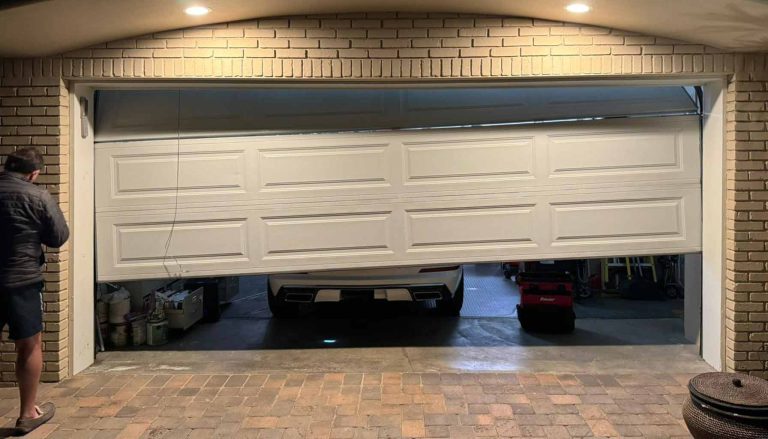
Uneven lift
When one cable slips on its drum or stretches, that side lifts slower and the door tilts.
Track binding
A bent track can hold one side back while the other keeps moving, twisting the door in its opening.
Why it matters
A crooked door puts uneven load on the panels and hardware and can come off track. Stop using it and have it inspected.
Cable imbalance and track resistance
A slipped cable can let one side move differently from the other. A binding roller can also hold one side back even when both cables appear present. That overlap is why a technician should inspect the complete lifting and guiding system rather than assume the visible tilt identifies a single failed part.
What not to test
Do not repeatedly press the opener button, lift the lower side or try to straighten the door by hand. Do not loosen a bracket or adjust cable tension. A door that looks stuck can still move unexpectedly, and trying to force it can twist panels or allow a roller to leave its track.
Information to give the provider
Describe when the tilt started, whether the door struck an object and whether a cable appears loose from a safe viewing position. Say whether it is partly open and whether vehicles are trapped. Give your ZIP code so the provider can confirm service availability; do not promise yourself a repair time based on coverage alone.
What a complete estimate should explain
Ask whether the cause is cable condition, drum seating, roller wear, track alignment or a combination. The estimate should distinguish replacement parts from adjustments and explain any secondary damage. A technician's on-site evaluation determines whether the existing panels and hardware can return to balanced operation.
How the lifting system fits together
Need help with your door?
Call with your ZIP and a description of the problem. An independent provider confirms availability and an estimate before work.
(213) 277-3731