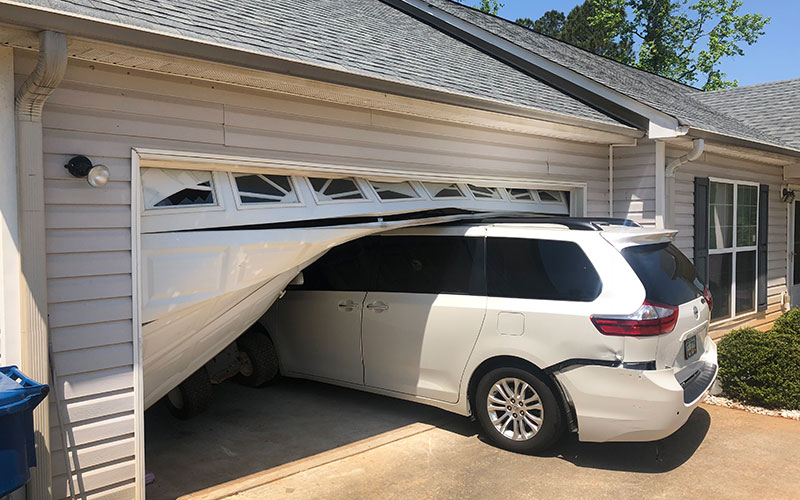
Stop using the opener
Do not run the opener. Disconnect power only if you can reach the power source without approaching or going under the damaged door. Running it can bend the track further or pull the door down unevenly.
Keep clear
Keep people, pets and vehicles away from under the door. Don't try to lift it or push rollers back by hand.
Note what you see from a safe distance
Tell the provider whether the door is crooked, hanging open or visibly outside its track. Only take photos if you can remain clear of the damaged door; do not approach tensioned hardware for a close-up.
Get a professional evaluation
Off-track doors often involve cable or spring tension. Re-seating the door safely requires securing it first.
Do not pull the emergency release
The release separates the opener from the door; it does not support a door whose rollers or cables have failed. Pulling it on an unstable door can let the door move unexpectedly. Leave the door in its current position and prevent anyone from operating the controls.
What the incident can reveal
A vehicle strike suggests possible panel and track damage. A loud bang followed by uneven movement may involve a cable or other lifting hardware. Gradual scraping before derailment may involve worn rollers or alignment. These are clues for an inspection, not a diagnosis or instructions to reset the door.
Repair versus replacement
A roller can sometimes be re-seated after the cause is corrected, but damaged panels, hinges, mounting points or crushed track sections can change the repair plan. The provider should explain what remains structurally sound and which parts cannot reliably guide or support the door. Replacement is not automatic, and it cannot be ruled out from a distance.
Before authorizing the work
Ask how the door will be secured, what caused it to leave the track and which parts are included in the estimate. Confirm whether the proposal covers cables, rollers, brackets and any damaged track sections. The final assessment should address balanced travel and the underlying failure, rather than simply pushing a roller back into place.
How a roller follows the track
Need help with your door?
Call with your ZIP and a description of the problem. An independent provider confirms availability and an estimate before work.
(213) 277-3731